At The Nine Aurora Beauty Zones, packaging is part of the skincare ritual.
Not a decorative layer.
Not a gesture of excess.
Not a box designed only to impress.
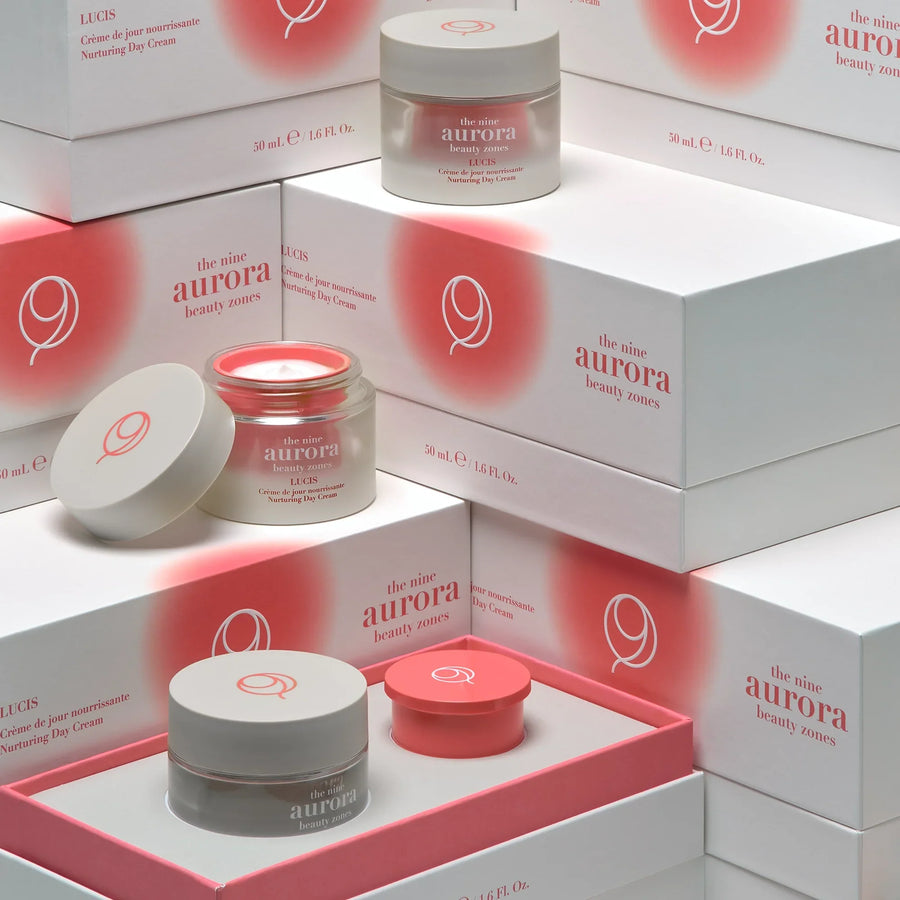
It is a system designed to protect the formula, elevate the first experience, and teach a behavior that matters more than the first purchase: refill.
In beauty, packaging is often judged in a single moment. A box is seen, opened, discarded, and then evaluated as waste. But refillable skincare cannot be understood through the first box alone.
The first package has one role.
It must introduce the system.
The refill has another role.
It must reduce what is repurchased again and again.
This is the principle behind The Nine Aurora’s packaging architecture: preserve the elegance of the first experience while moving future purchases toward lighter, more intelligent refill formats.
The goal is not simply to make the first box smaller: the goal is to reduce the repeated jars and bottles.
A Larger Product, Designed for a Longer Ritual
The Nine Aurora ritual begins with formats designed to last.
Photogena Facial Treatment Cleanser, Ionis Toning Mist, and Noctis Night Deep Cleanser are each presented in a 200 mL / 6.7 fl oz glass format.
This size is intentional.
A cleanser and a toning mist are not occasional products. They are daily-use ritual steps. A 200 mL format supports continuity, reduces the frequency of replacement, and creates a stronger relationship between the packaging used and the amount of formula delivered.
In sustainability, size should not be judged in isolation.
A smaller bottle is not automatically more responsible. The better question is how much product the packaging delivers, how long it lasts, how well it protects the formula, and how often the entire structure must be repurchased.
For The Nine Aurora, the larger glass format reflects a long-use philosophy.
A ritual product should not feel disposable.
It should feel durable, generous, and made to remain in the routine.
The Role of Glass
Glass was chosen because it supports formula protection, durability, and the sensorial quality of the ritual.
But glass also requires responsibility.
A larger glass bottle must be protected during storage, transport, retail handling, and home use. If a product breaks, the waste is not only the bottle. It is the formula, the shipment, the replacement, the handling, and the lost customer experience.
This is why the outer box has a technical purpose.
It protects the product before the ritual begins.
The box is not designed to create empty luxury. It is designed to protect a larger glass format and preserve the integrity of what is inside.
The First Box Is the Education Layer
The Nine Aurora first-purchase box is designed to do something that a smaller carton cannot do as effectively: teach.
Refillable skincare is not yet automatic behavior.
Customers need to understand what to keep, what to replace, how the refill works, and why the refill should become the next purchase.
Without education, refill systems fail.
A customer may discard the permanent jar.
She may not understand the airless refill.
She may repurchase the full product instead of the refill.
The sustainability benefit may never happen.
This is why the first box is intentionally more complete.
It creates the space to explain the ritual, the ingredients, the refill mechanism, and the value of keeping the primary pack.
The first box is not the reduction.
The first box is the instruction that makes the reduction possible.
The Refill Target Is the Primary Pack
The most important point is this:
The refill system is not mainly about reducing the outer box.
It is about reducing the repeated primary packaging.
The primary pack is the heavier and more complex part of the system: the glass jar, the airless bottle, the pump, the permanent structure designed to be kept.
That is what the refill is designed to avoid.
For cream and mask formats, our working packaging model shows:
Full primary jar: approximately 227 g
Refill primary component: approximately 9 g
That means every refill can avoid approximately 218 g of repeated primary packaging.
The full jar is more than 25 times heavier than the refill component.
For serum and eye formats, our working packaging model shows:
Full airless primary pack: approximately 160 g
Refill primary component: approximately 16 g
That means every refill can avoid approximately 144 g of repeated primary packaging.
The full airless primary pack is approximately 10 times heavier than the refill component.
This is the core of the system.
The first box educates.
The refill replaces.
The jar stays.
The repeated primary pack is avoided.
The 300% Refill Adoption Model
Education becomes meaningful when it changes behavior.
If better refill education increases refill sales by 300%, refill purchases become four times the original baseline.
For example:
If a product begins with 100 refill purchases, a 300% increase brings refill purchases to 400.
That creates 300 additional refill purchases.
If those 300 additional refills replace 300 full-product repurchases, the material avoided is not theoretical.
For cream and mask formats:
300 additional refills × 218 g avoided primary packaging = 65,400 g
That equals 65.4 kg of avoided repeated primary packaging.
For serum and eye formats:
300 additional refills × 144 g avoided primary packaging = 43,200 g
That equals 43.2 kg of avoided repeated primary packaging.
This is why education matters.
A larger first box that increases refill understanding can reduce far more material over time than a smaller first box that fails to move the customer toward refills.
The sustainability value is created not by the box alone, but by what the box teaches the customer to buy next.
Why the Airless System
The Nine Aurora serum system uses airless refill packaging because advanced skincare formulas require controlled dispensing and thoughtful protection.
An airless system is not a standard pump.
It is a technical format designed to support formula integrity, controlled use, and a more precise application experience.
But technical systems need explanation.
The customer must know how to remove the empty component, attach the refill correctly, keep the permanent bottle, and continue the ritual without repurchasing the full structure.
This is why airless packaging and education must work together.
A refill that is not understood will not be used.
A refill that is clearly explained can change the repurchase cycle.
The Outer Box Makes the Refill System Executable
It protects the larger glass formats.
It gives space to explain the ritual.
It introduces the refill logic.
It teaches the customer what to keep.
It supports the premium feeling that makes the permanent pack worth preserving.
It increases the chance that the next purchase is a refill, not another full jar.
This is the packaging logic behind The Nine Aurora.
The first experience must be complete enough to make the second purchase lighter.
In refillable beauty, reduction does not always begin with the smallest possible first package.
Sometimes reduction begins with the best-designed first experience.
Less can mean fewer jars repurchased.
Fewer airless bottles replaced.
Fewer pumps discarded.
Fewer full systems bought again.
Fewer primary packs entering the cycle after the first purchase.
This is the reduction that matters most.
The Nine Aurora does not measure packaging only by what is visible on day one. We measure it by what the system can prevent over time.
A refill model succeeds when the customer understands it, values it, and repeats it.
That is why the first package carries education.
That is why the refill carries reduction.
Designed to Keep the Jar
The Nine Aurora packaging was designed around a simple idea:
The jar should stay.
The airless bottle should stay.
The ritual should continue.
The refill should become the natural next purchase.
The first box creates the emotional and educational conditions for that behavior.
It protects the product.
It explains the system.
It preserves the premium experience.
It makes the permanent component feel worth keeping.
And when refill adoption increases, the impact becomes measurable.
A 300% increase in refill sales can translate into dozens of kilograms of avoided repeated primary packaging for every 300 additional refill purchases, depending on the product format.
That is the purpose of the system.
Not to make packaging larger for its own sake.
To make the next purchase lighter.
To make the jar last longer than one cycle.
To turn the first experience into a long-term refill ritual.
Long Live the Skin.