






















Skinspan: The Word Dermatology Chose for Skin Longevity

Every few years, science hands beauty a new word. Most of them fade quickly. A few of them quietly change how people think about their skin.
Skinspan looks like one of the few.
The idea behind it is simple to state. Skin longevity is how long skin keeps doing its job well — holding barrier strength, moisture, smoothness, elasticity and even tone over years rather than weeks. In 2025, dermatology gave that idea a name of its own: skinspan.
This article looks at where the word comes from, what it actually means, and what it changes — and does not change — about how skin should be cared for.
Where the word comes from
In September 2025, the Journal of Cosmetic Dermatology published a review titled “Skinspan: A Holistic Roadmap for Extending Skin Longevity With Evidence-Based Interventions.” Written by the dermatologists Elizabeth Kream, Sabrina G. Fabi and Monica Boen, it defines skinspan as the period during which skin maintains a youthful, healthy appearance — the preservation of skin health and appearance relative to chronological age.
The word is built deliberately. Longevity science already distinguishes between lifespan, the number of years a person lives, and healthspan, the number of those years spent in good health. Skinspan extends the ladder one step further: the number of years skin remains healthy, functional and resilient.
That framing matters. It moves the conversation away from chasing a younger face and toward a more useful question: how long can skin keep working well?
Why skin needed its own word
It might seem excessive to give a single organ its own span. The review’s authors argue otherwise: skin is not only a protective barrier against environmental stress but also a visible indicator of health and vitality.
Skin is the body’s largest organ and the only one permanently on display. It regulates temperature, holds water, filters light and defends against the environment — and every one of those functions can be observed and, increasingly, measured. Barrier strength, hydration, elasticity and evenness of tone are not abstractions. They are how skin health shows itself over time.
This is also where skinspan breaks from the older vocabulary of beauty. Anti-aging asked skin to look different. Skinspan asks skin to keep functioning — and regards the look of radiance, smoothness and firmness as the visible result of function that has been maintained, not a surface to be corrected.
What shapes a skinspan
The most striking part of the review is how it orders its evidence. Before any formula or device, it starts with daily life. Photoprotection comes first — consistent defence against UV exposure remains the single most documented way to protect how skin ages. Alongside it sit the habits longevity research keeps returning to: not smoking, a balanced diet, regular sleep and physical activity.
Topical care comes next. The review highlights the ingredient families with the deepest evidence behind them — retinoids, vitamin C and peptides among them — used consistently over time rather than intensively in bursts.
The authors then survey what lies beyond the bathroom shelf: in-clinic procedures such as laser and light-based treatments, and emerging systemic approaches still under study. Those belong to medicine, decided case by case with qualified practitioners — a reminder that skinspan is a wide field, of which skincare is one part.
Across every category, the same pattern repeats: consistency outperforms intensity. Skinspan is not built in a weekend. It is built in rhythms — daily, nightly, seasonal — sustained over years.
What longevity looks like in a place
There is a second reason this idea interests us, and it has to do with where ingredients come from.
Long before dermatology named skinspan, researchers studying human longevity noticed something about certain regions of the world: people in them tended to live longer, and to stay well for more of those years. What those places had in common was rarely a single remarkable substance. It was a pattern — diet, climate, daily movement, sun exposure, and plants that had adapted to demanding conditions.
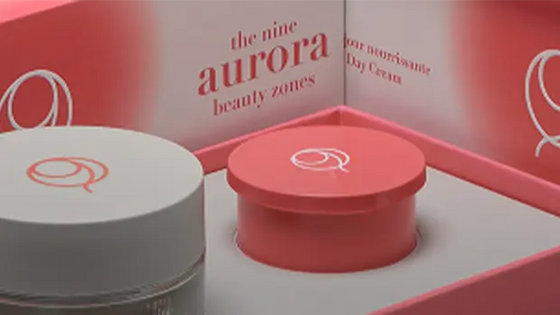
The Nine Aurora is built around nine such places. Not metaphors, and not regions of the face — actual geography, each with its own climate, its own botanical heritage and its own long tradition of care: the Peloponnese in Greece, Shizuoka in Japan, the Argan Forest of Morocco, the Amazon Rainforest in Brazil, a Himalayan valley in Nepal, Hveragerði in Iceland, Lyngen in Norway, Tuscany in Italy, and Redlands in the United States.
Plants that survive in demanding places tend to develop robust protective chemistry — the resin of a Mediterranean shrub, the oil of an Amazonian palm, an alga anchored in cold Norwegian water. That is what makes them interesting to a formulator, and it is why every ingredient we use is documented individually in our ingredient library: what it is, where it grows, and what it does for skin.
One idea, two words
Skinspan and skin longevity describe the same idea — one from the research literature, one from everyday language. At The Nine Aurora we use skin longevity, because it says plainly what the science is reaching for: skin that keeps its quality over time.
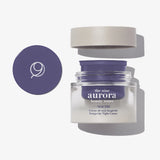
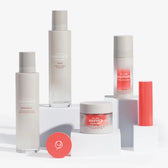
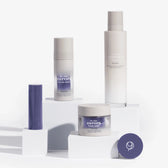
It is worth being honest about what that means for skincare. No cream extends a lifespan, and no ritual stops aging. What thoughtful cosmetic care can do is support the conditions skin needs to stay at its best — helping support the skin barrier, keeping skin feeling hydrated, smooth and comfortable, and helping improve the look of radiance and evenness. That is why our formulas are built around a day and night rhythm: protection and hydration while skin faces the world, renewal-supporting care while it rests.
Skinspan gives that philosophy a scientific name. The practice remains what it has always been — a refined ritual, repeated with intention.
Common questions about skinspan
Is skinspan a real scientific term?
Yes — and a young one. It entered the peer-reviewed dermatology literature in September 2025, through the Journal of Cosmetic Dermatology review cited below. Expect to see it more often as skin-longevity research grows.
Is skinspan just another word for anti-aging?
No. Anti-aging focuses on reducing the visible signs of age once they appear. Skinspan describes something broader: how long skin maintains its health, function and appearance relative to its chronological age. It is a measure of preservation, not correction.
What is the difference between skinspan, healthspan and lifespan?
Lifespan is how long a person lives. Healthspan is how many of those years are spent in good health. Skinspan applies the same logic to a single organ: how long skin stays healthy, functional and resilient relative to its chronological age.
Can skincare change your skinspan?
The strongest evidence sits with daily habits — sun protection above all, together with sleep, diet, exercise and not smoking. Within that frame, consistent cosmetic care plays a supporting role: helping maintain the skin barrier, hydration and the look of skin quality over time. The theme across all of it is consistency, sustained for years rather than weeks.
Source
- Kream E., Fabi S. G., Boen M. “Skinspan: A Holistic Roadmap for Extending Skin Longevity With Evidence-Based Interventions.” Journal of Cosmetic Dermatology, September 2025, Vol. 24, Issue 9. DOI: 10.1111/jocd.70432
Long live the skin
Bring the research into your ritual
Every formula in the collection carries the science you just read — day and night rituals designed for long-term skin quality.


