A honeycomb rendered half as a precise pencil drawing and half as photography, on a clean white background

Sustainability

A new way:
skincare meant
to be kept.

One vessel you keep. Refills that arrive with consistency. A system built to make it effortless.

Our belief

Refills will drive sustainability.
Education makes them happen.

Most people who own a refillable product never refill it — not for lack of will, but because nobody ever showed them how. That gap is the problem we design for. Every choice on this page — the packaging, the materials, the box in your hands, the QR code on it — exists to teach the refill until it becomes a habit.

01 · Secondary packaging

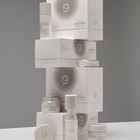
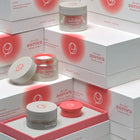
The box that teaches

Tap to discover

01 · Secondary packaging

The box that teaches

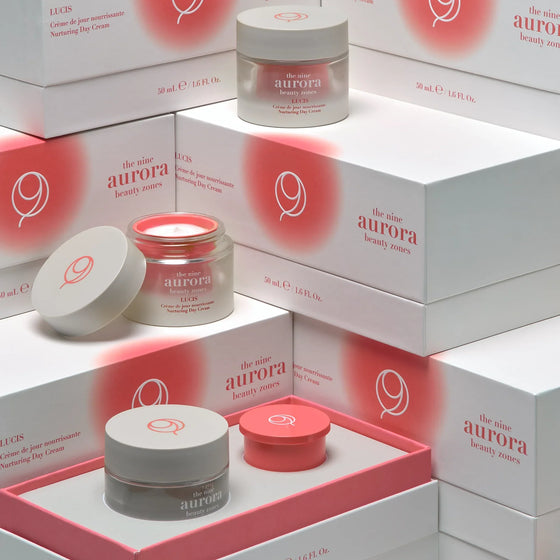
Refill systems fail on knowledge, not on willingness — so the box is the teaching instrument. It arrives once, with your vessel: it shows you the refill gesture and carries the QR code that answers the sorting question for your exact address.

One box, received once — then years of refills.

How the box teaches →
02 · Primary packaging

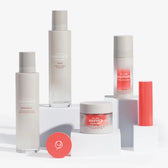
The vessel built for refills

Tap to discover

02 · Primary packaging

The vessel built for refills

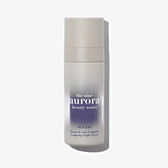
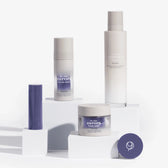
A 120-gram glass bottle engineered to be kept, with a pump rated for up to 25 refills; a jar whose formula lives in a slim pod that lifts straight out. After your first purchase, the only part that ever repeats is the refill itself — a fraction of the vessel it renews.

Every material, explained →
03 · Loyalty & subscription

The rhythm that keeps it going

Tap to discover

03 · Loyalty & subscription

The rhythm that keeps it going

Refill & save delivers the pod or cartridge on schedule — never another vessel you already own — and MyTheNineAurora pays its rewards in refills. Performed every time, the refill changes the footprint of an entire ritual.

Discover MyTheNineAurora →

Why we built it this way

Because the arithmetic of a refill is hard to argue with. The substance sits in the parts you keep; the parts that repeat are engineered to weigh almost nothing. Here is what that design is expected to avoid.*

~90%

Less packaging per serum refill

A serum refill is a 16-gram sealed cartridge and cap — in place of a complete 162-gram bottle system manufactured, shipped and discarded again.

25×

One bottle, many lives

The glass vessel and its pump are engineered to be refilled up to 25 times before retiring.

~3.6 kg

Avoided over one bottle’s life

If a single serum bottle lives through its 25 refills, roughly 3.6 kilograms of packaging are never produced, shipped or thrown away.

218 g

Avoided with every cream refill

Each cream refill pod replaces a complete new jar system — avoiding roughly 218 grams of repeated packaging every time.

*Our own calculations from the engineering specifications of our packaging components: a serum refill (sealed cartridge and cap, ~16 g) compared with a complete bottle system (glass vessel, pump and cartridge, ~162 g); that difference carried across the pump’s 25-refill engineering rating; and the cream pod compared with a complete new jar. Figures are expected reductions under normal use, not third-party measurements.

How to refill

The gesture we designed everything around. Six of the nine formulas refill — both serums, both creams, the eye cream and the mask. Same formula, same clinical testing, a fraction of the packaging.

1
The Noctis night serum refill cartridge being placed into the glass bottle

Keep your vessel

Your bottle or jar stays with you — it was designed for this moment, not for the bin.

2
A model holding the Noctis night serum refill pod

Add the refill

The serums refill through the cap of the bottle you already own; the cream and mask pods are placed directly into the jar. Renova's pod screws into the cap, then into the jar.

3
The Noctis night serum refill pod and its cap, separated for sorting

Sort the rest

Scan the QR code on the packaging to see exactly how to sort each component where you live.

A profile silhouette on a deep green leaf, ringed by the names of the nine Skin Longevity Zones

Our skin, our formulas and the Earth are all connected.

Materials catalogue

Why we chose these materials

Each material was chosen for what it asks you to do with it: keep the glass, return only the pod, sort every part correctly.

Bottles & jars
The Photogena cleanser glass bottle, opened, showing the refillable vessel

Glass, for the vessels

Recycles endlessly without losing quality — but heavy, so it only pays off if it stays. Ours is engineered to be kept and refilled, sized at 200 ml so you replace it half as often.

Creams & mask · polypropylene
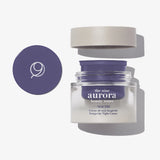
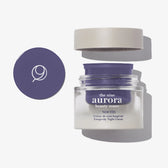
A Noctis cream refill pod lifted out of its open glass jar

Light plastic, for the refill pods

A slim polypropylene cup instead of a whole new jar — roughly 218 g of packaging avoided with every cream refill. It lifts out clean, so glass and plastic never mix.

Serums · PP + PE
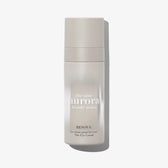
The Noctis night serum airless bottle

An airless cartridge, for the serums

No metal spring, far fewer parts than a conventional pump — and it seals the serum from air, so the actives stay stable to the last press.

Secondary packaging
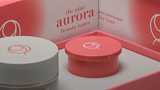
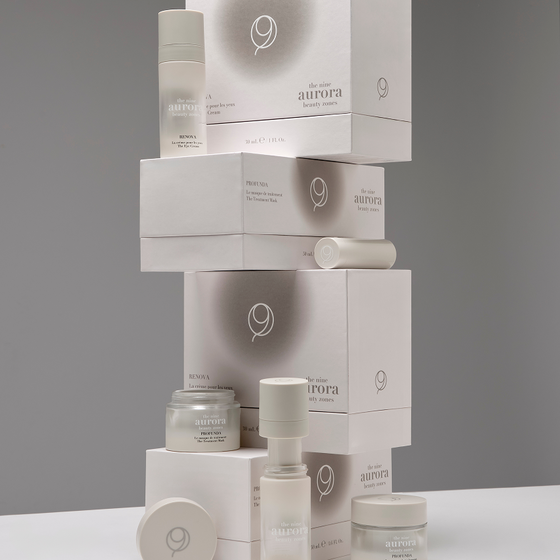
The Nine Aurora paper-based outer boxes

Paper, for the boxes

Paper-based and recyclable — the first box teaches the refill gesture, and every box carries the QR code that answers the sorting question for your address.

How to dispose of it

When a vessel has finally reached the end of its refills, every part separates. Here is where each one goes.

Glass bottle or jar

Glass collection. For the refillable vessels, only once you have finished refilling — that part is designed to stay with you for years. The cleanser bottles don’t refill, but they hold 200 ml (6.8 fl oz) — close to double the usual size — so each one lasts far longer before it is recycled.

Cream & mask refill pod

Plastic collection. Lift the empty pod straight out of the jar. It is a single polypropylene part, which is what makes it straightforward to sort.

Serum airless cartridge

Plastic collection. Release it through the cap in one gesture and the glass stays behind, in use.

Pump and caps

Check your local rules first. Pumps combine more than one material by necessity, and not every municipality accepts them in household plastic collection. The QR code will tell you what yours does — we would rather say this plainly than let a pump contaminate a good stream.

Box and printed leaflet

Paper collection. Flatten the box first; it takes a second and it materially helps the sorting facility.

Sorting rules are set locally, not by us — the same component can belong in different streams in two neighbouring countries. That is the reason for the QR code below: it resolves the question for where you actually live.

The QR code on every box

Designing better packaging only works if using it right is effortless — so the guidance travels with the product instead of living on a page you would have to go looking for.

Powered by BuyerDock. Our iQRcode is built on GS1 Digital Link, the same standard the retail industry is moving its barcodes to. One code carries a Digital Product Passport for the exact product in your hand and generates the sorting marks each market requires — so the guidance stays correct as the rules change, without reprinting a single box.

Good to know

Questions, answered

Why does refillable skincare need education?

Because refill systems fail on knowledge, not on willingness — most people who own a refillable product were simply never shown the gesture. That is why our first box teaches the refill, subscriptions deliver only the pod or cartridge, and the QR code on every box answers the sorting question for exactly where you live.

How much packaging does a refill actually save?

By our own calculations from the engineering specifications of our packaging components: a serum refill is a sealed cartridge and cap of about 16 g in place of a complete bottle system of about 162 g — roughly 90% less packaging per refill — and each cream refill pod avoids roughly 218 g of repeated packaging. A serum bottle that lives through its 25-refill engineering rating avoids about 3.6 kg of packaging over its life.

Which products can I refill?

Six formulas refill: Lucis Protecting Day Serum, Lucis Nurturing Day Cream, Noctis Longevity Night Serum, Noctis Longevity Night Cream, Renova The Eye Cream and Profunda The Treatment Mask. Photogena and Ionis do not use refill pods.

Is the refill formula identical to the original?

Yes — a refill contains exactly the same clinically and dermatologically tested formula as the original product. Only the packaging changes. And with "Refill & save" on the product page, refill pods arrive automatically on subscription, at the rhythm you choose.

How many times can I reuse the serum bottle?

The serums use a refillable glass airless system whose refill mechanism is engineered for up to 25 refills under normal use — the glass bottle simply stays with you while only the sealed inner cartridge is replaced.

How do I know how to recycle the packaging?

Each product carries a QR code that opens local sorting guidance for every component of its packaging — so you can recycle correctly wherever you are. Glass and plastic parts are designed to separate easily into their own collection streams.

Are the products vegan and cruelty-free?

Yes. Every formula in the collection is vegan and cruelty-free, with 92% of ingredients of natural origin across the collection (90–97% depending on the product).

Where do the ingredients come from?

Our botanicals are connected to the nine Skin Longevity Zones through our research, and we buy them from farms and producers we work with directly — yuzu and ume for Shizuoka, argan and myrtle for the Argan Forest, mastic and tangerine for the Peloponnese, kelp for Lyngen, oat and lavender for Tuscany, and the Amazonian oils and butters from the forest. A shorter chain is one we can trace back to the harvest, and it keeps the value where the plant grows.

What do I do with the pump when the bottle finally retires?

Check your local rules before putting it in household plastic collection. A pump necessarily combines more than one material, and not every municipality accepts it — the QR code on the box resolves this for your area. Everything else separates cleanly: glass to glass, pod and cartridge to plastic, box to paper.